

Introduction: Navigating the Global Market for Glass Nail Polish Bottle
When sourcing glass nail polish bottles for international cosmetic distribution, procurement teams face a complex landscape where material integrity, regulatory compliance, and supply chain reliability intersect. The shift toward premium packaging in emerging markets across Africa, South America, and the Middle East has elevated demand for high-quality soda-lime glass containers, yet navigating manufacturer capabilities, chemical compatibility standards, and cross-border logistics remains a critical challenge for B2B buyers seeking competitive advantage in the beauty sector.
How Can International Buyers Ensure Chemical Compatibility and Regulatory Compliance?
Glass nail polish packaging demands precise resistance to aggressive solvents like ethyl acetate and butyl acetate, requiring non-reactive soda-lime glass that meets FDA and SGS certification standards. For buyers in Germany and Saudi Arabia, where regulatory scrutiny is stringent, and for growing markets in Brazil or Nigeria, where logistics infrastructure varies, selecting suppliers with proven quality control systems and appropriate breakage-prevention packaging protocols is essential for protecting inventory investments and maintaining brand reputation across diverse regulatory environments.
What Comprehensive Procurement Strategies Does This Guide Cover?
This resource delivers actionable intelligence across the entire sourcing spectrum, examining glass bottle specifications including UV gel compatibility, neck finish standards, and customization capabilities for caps and brushes. You will discover rigorous supplier evaluation frameworks, cost-optimization strategies for bulk orders, and region-specific compliance requirements for European and Middle Eastern markets. From understanding MOQ negotiations with established manufacturers to implementing quality assurance protocols that minimize transit breakage, each section provides decision-making frameworks tailored to international wholesale operations in Africa, South America, Europe, and the Middle East.
Whether you are establishing new supplier relationships in emerging markets or optimizing existing supply chains, this guide equips you with the technical knowledge and strategic insights necessary to secure glass nail polish packaging that aligns with both your quality standards and your growth objectives.
Understanding Glass Nail Polish Bottle Types and Variations
| Название типа | Ключевые отличительные особенности | Основные приложения B2B | Краткие плюсы и минусы для покупателей |
|---|---|---|---|
| Standard Round Clear Bottles | Classic cylindrical shape; soda-lime glass construction; high transparency; 8-15ml standard capacity; universal neck finishes (13/415, 15/415) | Mass-market nail polish brands, salon supply wholesalers, private label startups entering price-sensitive regions | Pros: Lowest unit cost, abundant mold availability, minimal breakage during transit Cons: Commoditized appearance, limited shelf differentiation in competitive retail environments |
| Square/Rectangular Glass Bottles | Geometric flat-panel design; stable base; maximized label surface area; premium weight distribution; often thicker wall construction | Luxury cosmetic brands, boutique nail lines, professional salon exclusives targeting Middle Eastern and European markets | Pros: Enhanced brand visibility, space-efficient storage, upscale tactile feel supporting premium pricing Cons: Higher unit cost, increased freight weight, requires specialized protective packaging to prevent corner chipping |
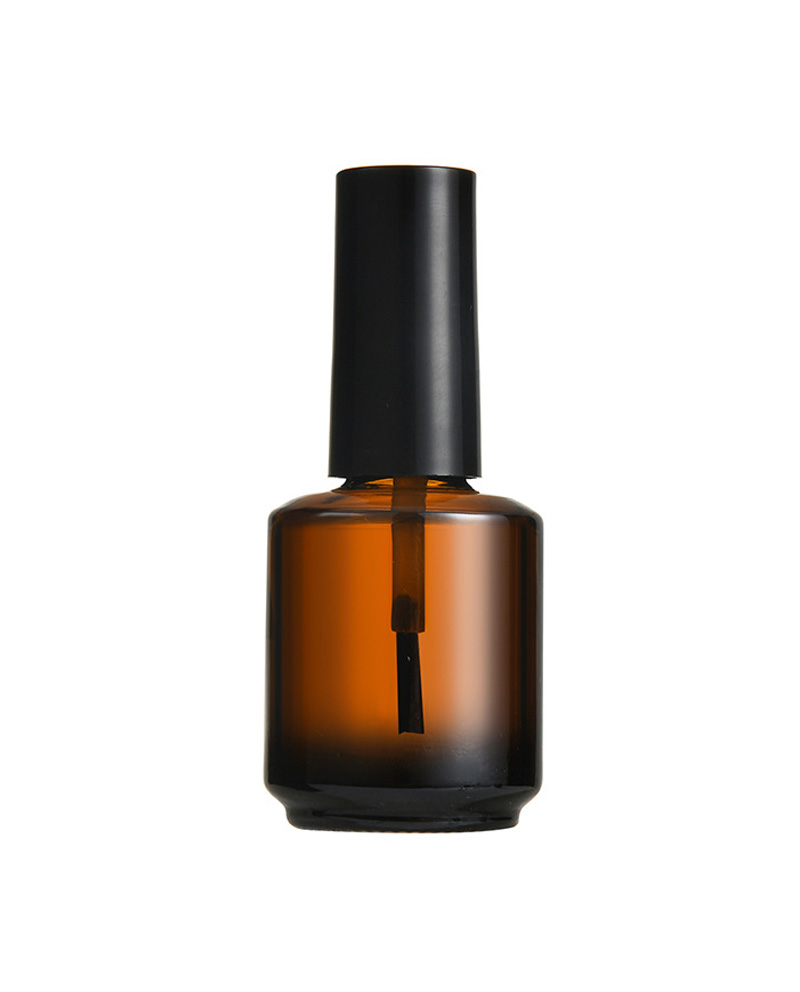
| UV-Resistant Amber/Smoked Bottles | Tinted soda-lime glass (amber or smoke); light-blocking properties blocking 99% UV below 450nm; specialized for photosensitive contents | UV/LED gel polish manufacturers, pharmaceutical-grade nail treatments, light-sensitive formulations requiring extended shelf stability | Pros: Prevents premature curing of photoinitiators, extends product efficacy, meets regulatory standards for sensitive formulas Cons: Higher MOQ (typically 30-50% above clear glass), longer lead times, obscured color visibility of contents |
| Miniature Sample Size Bottles | Reduced capacity (3-5ml); compact dimensions; reinforced neck sections; often paired with proportionally reduced brush sizes | Promotional campaigns, travel retail sets, subscription box samples, color testing kits for African and South American markets | Pros: Lower per-unit material |
Key Industrial Applications of Glass Nail Polish Bottle
| Промышленность/сектор | Specific Application of Glass Nail Polish Bottle | Ценность/выгода для бизнеса | Ключевые соображения по поиску источников для данного приложения |
|---|---|---|---|
| Professional Salon & Spa Services | Bulk dispensing of UV/LED gel polishes, nail hardeners, and treatment oils in retail-sized containers | Enhances brand perception as premium service provider; chemical stability prevents solvent evaporation and maintains formula viscosity in climate-controlled storage | Shatter-resistant master carton packaging for long-haul shipping to high-temperature regions; verification of brush cap compatibility with viscous gel formulas |
| Luxury Beauty & Cosmetics Manufacturing | Primary packaging for high-pigment nail lacquers, base coats, and metallic finishes targeting prestige retail and duty-free channels | Superior optical clarity showcases true color accuracy for consumer evaluation; inert glass prevents degradation of nitrocellulose-based formulas ensuring extended shelf life | Compliance with EU Cosmetic Regulation (EC) No 1223/2009 and FDA standards; customization capabilities for hot-stamp branding and specialty coating finishes |
| Wellness & Aromatherapy | Containment for cuticle oils, nail serums, and essential oil blends (e.g., argan, oud) requiring absolute chemical stability | Non-reactive properties maintain therapeutic compound integrity and prevent oxidation; recyclable soda-lime glass aligns with sustainability mandates prevalent in European markets | Pharma-grade glass certification with lead/cadmium content verification; leak-proof cap and brush assemblies designed for oil-based rather than solvent-based viscosities |
| Hospitality & Travel Retail | Single-use and travel-size premium nail care amenities for luxury hotels, airlines, and airport duty-free boutiques | Elevates guest experience through tactile weight and perceived luxury; UV resistance protects gel formulas in brightly lit display cases common in Middle Eastern and European airports | Compact palletization strategies to minimize cubic meter freight costs; shock-absorbing secondary packaging to prevent breakage during international transit |
| Specialty Chemical & Artisanal Production | Small-batch packaging for industrial nail coatings, artistic resin polishes, and educational chemistry sets | Chemical resistance to aggressive solvents like ethyl acetate and butyl acetate; thermal stability allows heat-sterilization processes impossible with plastic alternatives | Flexible MOQ arrangements for emerging market startups; compatibility with automated filling equipment despite small production runs |
How Do Professional Salons and Spas Ensure Product Integrity with Glass Packaging?
Professional nail care facilities across Saudi Arabia and South Africa rely on glass bottles to store UV-cured gels and solvent-based treatments that degrade in plastic containers. The non-porous soda-lime glass prevents evaporation of volatile compounds like ethyl acetate in hot climates, ensuring consistent viscosity for salon applications. B2B buyers must prioritize suppliers offering reinforced carton dividers and temperature-controlled logistics to mitigate breakage risks during long-haul shipping to regional distribution centers.
Why Do Luxury Cosmetic Brands Prefer Glass for High-End Nail Polish Lines?
European markets, particularly Germany, demand pharmaceutical-grade glass packaging that complies with strict EU cosmetic regulations while supporting circular economy initiatives. Glass bottles provide the optical clarity necessary for showcasing true pigment colors in luxury lacquers, while their chemical inertness prevents interaction between aggressive solvents and packaging materials. International buyers should verify FDA and SGS certifications alongside customization capabilities for embossed logos and specialty finishes that justify premium retail positioning.
What Makes Glass Bottles Essential for Wellness and Aromatherapy Applications?
Beyond traditional nail polish, these containers serve the growing Middle Eastern wellness sector for packaging cuticle oils infused with oud, argan, and essential oil blends that require absolute chemical stability. The impermeable barrier prevents oxidation of therapeutic compounds and maintains fragrance profiles during extended storage periods. Sourcing considerations include ensuring pharma-grade glass standards and compatible brush assemblies designed for viscous oil formulations rather than standard lacquer consistencies.
How Can Hospitality and Travel Retail Sectors Leverage Glass Packaging?
Premium hotels and duty-free operators in international airports utilize travel-size glass bottles to elevate amenity kits and retail offerings with tactile luxury. The material’s UV resistance protects gel formulas in brightly lit display cases common in Dubai or Frankfurt airport retail environments, while the substantial feel communicates quality to discerning travelers. Buyers must negotiate compact palletization strategies and shock-absorbing secondary packaging to minimize freight costs and breakage rates during global distribution.
What Solutions Do Glass Bottles Offer for Specialty Chemical and Artisanal Producers?
Small-batch industrial coating manufacturers and DIY craft suppliers in emerging South American and African markets utilize glass nail polish bottles for experimental resin formulas and educational chemistry sets requiring solvent-resistant containment. The thermal stability of soda-lime glass accommodates heat-sterilization processes impossible with plastic alternatives, while standardized neck sizes allow compatibility with automated filling equipment. Flexible MOQ arrangements from established manufacturers enable artisanal brands to access professional-grade packaging without massive capital investment.
A stock image related to Glass Nail Polish Bottle.
3 Common User Pain Points for ‘Glass Nail Polish Bottle’ & Their Solutions
Scenario 1: Managing High Minimum Order Quantities and Inventory Risk
Проблема: Emerging beauty brands and regional distributors across Africa, South America, and the Middle East frequently encounter manufacturers demanding rigid MOQs of 50,000 to 100,000 units for custom-molded glass bottles. For buyers testing new market penetration in regions like Saudi Arabia or launching seasonal collections in Germany, this creates severe working capital constraints and inventory obsolescence risk. The financial pressure intensifies when unique bottle shapes require expensive new mold investments, forcing smaller B2B players to choose between compromising their premium brand positioning or overextending cash flow on warehouse stock that may not align with shifting consumer preferences.
Решение: Negotiate with suppliers offering flexible MOQ tiers starting at 5,000-10,000 units for standard cylindrical or square designs, with scalable options for future growth. Implement hybrid customization strategies using stock soda-lime glass bottles combined with bespoke caps, brushes, and private label printing to achieve distinct branding without mold fabrication costs. Structure phased delivery agreements where you commit to the full production volume but receive monthly or quarterly shipments, reducing storage expenses and improving cash flow management while maintaining consistent supply for your distribution channels.
Scenario 2: Preventing Transit Breakage in International Logistics
Проблема: Glass nail polish bottles face disproportionate breakage risks during long-haul ocean freight to regions with challenging logistics infrastructure, such as Sub-Saharan Africa or remote Middle Eastern ports. The inherent brittleness of soda-lime glass combined with rough port handling, inadequate dunnage, and extreme temperature fluctuations can result in loss rates exceeding 10-15%. Unlike plastic alternatives, shattered glass creates contamination risks for surrounding inventory and safety hazards for warehouse staff, triggering costly insurance claims, delayed product launches, and strained relationships with retail distributors who expect intact, sellable deliveries without glass shard contamination.
Решение: Mandate industrial-grade export packaging specifications including honeycomb cardboard separators between layers, foam-in-place inserts molded to bottle contours, and ISPM-15 certified wooden pallets
Strategic Material Selection Guide for Glass Nail Polish Bottle
Selecting the optimal material for nail polish packaging requires balancing chemical compatibility, logistics costs, and brand positioning. While glass remains the dominant standard for professional-grade products, understanding the specific properties of each substrate enables buyers to align packaging investments with market demands and regulatory requirements across diverse international territories.
Which Glass Material Offers the Best Chemical Resistance for Solvent-Based Formulas?
Soda-lime glass represents the industry standard for commercial nail polish packaging, comprising approximately 90% of global B2B orders. This silica-based material provides exceptional inertness against aggressive solvents including ethyl acetate, butyl acetate, and nitrocellulose compounds, preventing chemical leaching or container degradation over time. Its high transparency allows for clear product visibility, while compliance with US FDA standards for lead and cadmium content ensures regulatory acceptance in European and Middle Eastern markets. However, buyers must account for inherent brittleness; bulk shipments require specialized dividers and foam protection, increasing freight costs compared to flexible packaging alternatives.
When Should B2B Buyers Invest in Borosilicate Glass Nail Polish Bottles?
Borosilicate glass serves premium market segments requiring enhanced thermal stability and durability. With a low coefficient of thermal expansion, this material resists cracking during temperature fluctuations encountered in Middle Eastern distribution chains or African storage facilities without climate control. Its superior chemical durability makes it ideal for UV/LED gel polishes and professional salon formulations that demand repeated handling. The material conveys substantial luxury perception through heavier weight and exceptional clarity, though procurement teams must justify the 40-60% cost premium over standard soda-lime options and manage limited supplier availability.
Why Select Amber Glass for UV-Sensitive Nail Polish Formulations?
Amber glass provides critical photoprotection for light-sensitive ingredients such as vitamins, botanical extracts, and certain resin systems prevalent in organic nail care lines. By blocking 99% of UV radiation, this tinted substrate extends product shelf life by preventing photodegradation and color shifting—particularly valuable for markets with extended distribution timelines like South America or Africa. The pharmaceutical-grade aesthetic aligns with clean beauty positioning, though the reduced visibility of product color requires strategic marketing approaches, and unit costs typically exceed clear glass alternatives by 15-25%.
Is PET Plastic a Strategic Alternative to Glass for Budget Nail Polish Lines?
Полиэтилентерефталат (ПЭТ) offers a lightweight alternative for mass-market and travel-retail applications where shatter resistance and freight efficiency outweigh premium presentation requirements. Weighing 70% less than glass equivalents, PET significantly reduces shipping costs and carbon footprint for long-haul logistics to European or South American markets. While standard PET exhibits moderate solvent resistance suitable for water-based polishes, B2B buyers must specify cosmetic-grade, solvent-resistant polymer formulations for traditional nail polish to prevent warping or chemical interaction. The material enables flexible custom molding and integrated coloration but carries lower perceived value in luxury segments.
| Материал | Typical Use Case for Glass Nail Polish Bottle | Ключевое преимущество | Основные недостатки/ограничения | Relative Cost |
|---|---|---|---|---|
| Стакан с содовой | Standard solvent-based nail polish, mass-market retail distribution | Excellent chemical inertness with aggressive solvents; FDA compliant; fully recyclable | Brittle structure requires protective shipping packaging; heavier than alternatives | Low-Moderate |
| Боросиликатное стекло | UV/LED gel polishes, premium luxury lines, professional salon products | Superior thermal shock resistance; exceptional clarity; premium tactile weight | Significantly higher material cost; limited global supplier base | Высокий |
| Янтарное стекло | Natural/organic nail polishes, vitamin-enriched formulas, extended shelf-life requirements | Blocks 99% of UV radiation; prevents photo-degradation; distinctive premium aesthetic | Reduced product visibility; higher unit cost; niche market positioning | Moderate-High |
| ПЭТ-пластик | Travel-size collections, budget mass-market lines, children’s nail polish sets | Shatterproof; 70% lighter than glass; reduced freight costs; flexible molding options | Requires specialized solvent-resistant grades; potential chemical leaching; lower luxury perception | Низкий |
Strategic material selection ultimately depends on your target demographic’s price sensitivity, regional climate conditions, and formula chemistry. High-growth markets in the Middle East and Europe increasingly favor sustainable soda-lime options, while German and Saudi Arabian luxury sectors demonstrate growing appetite for borosilicate durability. By aligning substrate properties with specific commercial requirements, B2B buyers optimize both supply chain efficiency and end-consumer satisfaction.

A stock image related to Glass Nail Polish Bottle.
In-depth Look: Manufacturing Processes and Quality Assurance for Glass Nail Polish Bottle
Glass nail polish bottle manufacturing demands precision engineering to balance aesthetic appeal with chemical resilience. For B2B procurement teams sourcing from international markets, understanding the technical workflow—from raw material selection to final inspection—provides critical leverage in supplier evaluation and quality negotiation. The following breakdown examines the industrial processes and quality frameworks that distinguish premium glass packaging manufacturers capable of meeting diverse regulatory requirements across European, Middle Eastern, African, and South American markets.
What raw materials ensure optimal chemical stability in glass nail polish bottles?
Premium glass nail polish bottles originate from soda-lime glass formulations, comprising approximately 70% silica sand, 15% soda ash, and 10% lime. This specific composition delivers the chemical inertness required to withstand aggressive solvents like ethyl acetate and nitrocellulose without degradation or leaching. Leading manufacturers utilize pharmaceutical-grade silica with iron content below 0.05% to achieve crystal clarity, essential for showcasing polish colors and maintaining brand presentation standards.
Sustainability considerations increasingly influence material selection for eco-conscious brands. Post-consumer recycled glass (cullet) can constitute up to 30% of the batch without compromising structural integrity, provided contamination screening removes ceramic or lead-bearing fragments. For markets requiring strict compliance, such as EU cosmetic packaging regulations or Saudi Arabian standards, manufacturers must verify that raw materials contain no heavy metal additives, particularly ensuring lead and cadmium migration levels remain below 0.01 mg/L thresholds through rigorous batch testing.
How does IS machine technology shape precision nail polish containers for bulk production?
Modern manufacturing employs Individual Section (IS) machines for high-speed forming, capable of producing 200-400 bottles per minute with minimal dimensional variance. The process begins in regenerative furnaces operating at 1,550°C, where the glass batch melts into a homogeneous liquid free from seeds (air bubbles) and stones (unmelted particles). Precision gob feeders cut exact glass “gobs” that drop into blank molds for initial parison formation.
For nail polish bottles specifically, manufacturers typically utilize blow-and-blow forming rather than press-and-blow, as this method creates thinner, more uniform walls ideal for the 5ml to 15ml capacity range standard in cosmetics. The parison transfers to a blow mold where compressed air expands it to final dimensions. Critical to this process is the neck finish formation—precision-machined threads must accommodate standard 13/415 or 15/415 caps with tolerances of ±0.2mm to prevent leakage during automated filling and ensure consumer usability. Mold maintenance protocols, including diamond polishing every 50,000 cycles, prevent surface imperfections that could weaken structural integrity.
Why is controlled annealing essential for preventing thermal shock in international shipping?
Following formation, bottles undergo controlled annealing in lehr ovens, a process often overlooked but vital for logistics resilience. Rapid cooling would create internal stress points within the glass matrix, rendering bottles susceptible to cracking during temperature fluctuations encountered in container shipping from Asia to Europe or during warehouse storage in varying climates.
The annealing process gradually reduces temperature from 550°C to ambient over 2-4 hours, depending on wall thickness. This thermal treatment relieves residual stresses, increasing mechanical strength by 40-60% and preventing spontaneous breakage. For B2B buyers sourcing for German or Saudi Arabian markets, verifying annealing protocols becomes crucial, as improperly treated glass may exhibit failures during steam sterilization processes required by some cosmetic fillers or when exposed to extreme desert heat during Middle Eastern distribution.
What surface treatments enhance chemical resistance and filling line efficiency?
While soda-lime glass inherently resists nail polish solvents, premium manufacturers apply additional surface treatments to optimize performance. Internal siliconization creates a hydrophobic barrier that prevents polish adhesion to bottle walls, reducing product waste and improving evacuation rates during high-speed filling line operations.
External treatments include hot-end coating with tin oxide applied immediately after forming, followed by cold-end coating with polyethylene wax. This dual-layer protection prevents surface abrasion during automated handling and maintains clarity through multiple filling cycles. For UV-sensitive gel polishes popular in professional salon markets, amber or cobalt blue glass variants undergo ion-exchange coloration during melting rather than surface painting, ensuring colorfastness throughout the product lifecycle without risk of pigment migration into the formula.
How do manufacturers implement statistical quality control for high-volume B2B orders?
Quality assurance for international orders relies on statistical process control (SPC) rather than 100% inspection, given production rates exceeding 300 units per minute. Automated inspection stations equipped with high-resolution cameras and laser profilometers check dimensional parameters—including height, diameter, perpendicularity, and neck finish dimensions—at speeds matching production lines.
Wall thickness uniformity receives particular scrutiny, as variations exceeding ±0.3mm can create weak points vulnerable to breakage during capping or shipping. Manufacturers employ sampling plans aligned with ISO 2859-1 (General Inspection Level II), typically accepting quality levels (AQL) of 1.0 for critical defects (cracks, stones) and 2.5 for minor cosmetic imperfections. For buyers requiring documentation, Certificate of Analysis (CoA) reports for each production lot provide audit trails demonstrating compliance with specified tolerances and material safety standards.
What international compliance standards govern glass nail polish bottle safety for global distribution?
Global distribution necessitates adherence to multiple regulatory frameworks. FDA 21 CFR standards govern lead and cadmium content limits for North American markets, while European distribution requires compliance with Regulation (EC) No 1935/2004 on materials in contact with cosmetics and REACH regulations regarding Substances of Very High Concern. German buyers often specifically demand LFGB (Lebensmittel- und Futtermittelgesetzbuch) certification despite cosmetic applications, reflecting the region’s stringent material safety expectations.
Reputable manufacturers maintain SGS or Bureau Veritas certifications validating heavy metal testing, thermal shock resistance (tested via 42°C differential protocols), and internal pressure resistance. For Middle Eastern markets, SASO (Saudi Standards, Metrology and Quality Organization) compliance ensures adherence to Gulf Cooperation Council (GCC) specifications. African and South American importers should verify that suppliers provide Material Safety Data Sheets (MSDS) and heavy metal test reports to facilitate customs clearance and local regulatory approval.
How should glass nail polish bottles be packaged to prevent breakage during international logistics?
The manufacturing process concludes with export packaging engineered to withstand ocean freight and multi-modal transport across diverse climates. Bottles nest in corrugated partition boxes with cellular inserts, typically achieving 50-100 units per carton depending on capacity, with foam or paper dividers preventing glass-to-glass contact. Pallet configurations utilize slip sheets and corner boards to prevent compression damage, with standard 20-foot containers accommodating 20-25 pallets when properly loaded with weight distribution optimized for sea voyage.
Moisture protection proves critical for shipments to humid climates like Brazil, Nigeria, or Southeast Asian ports. Vapor barrier liners and desiccant packs prevent condensation “sweating” that could compromise label adhesion or promote mold growth on cardboard dividers. Buyers should verify that suppliers utilize ISPM-15 certified wooden pallets for EU and Middle Eastern destinations to avoid customs delays related to pest control regulations, while also confirming that pallet heights remain within 1.2m to facilitate standard racking systems in German or Saudi distribution centers.
Practical Sourcing Guide: A Step-by-Step Checklist for ‘Glass Nail Polish Bottle’
Procuring glass nail polish bottles requires balancing chemical integrity with supply chain efficiency. This checklist guides international buyers through critical validation points—from material composition to logistics protocols—ensuring your sourcing decisions align with regulatory requirements and market-specific demands across Europe, the Middle East, Africa, and South America.
1. How to Verify Chemical Compatibility and Material Safety Standards?
Begin by confirming the manufacturer uses soda-lime glass specifically formulated for cosmetic solvent resistance. Request technical datasheets verifying compatibility with ethyl acetate, butyl acetate, and nitrocellulose—common nail polish solvents that can degrade inferior packaging or cause leaching. Verify lead and cadmium content falls below FDA and EU regulatory thresholds, particularly critical for markets like Germany and Saudi Arabia with strict cosmetic packaging standards and environmental regulations.
2. What Certifications Should Suppliers Possess for Your Target Markets?
Demand current SGS certificates and FDA compliance documentation to ensure smooth customs clearance and retail acceptance. For European distribution, confirm adherence to EU Regulation 1223/2009 on cosmetic products and REACH standards. Middle Eastern buyers should verify Gulf Standardization Organization (GSO) conformity, while South American importers may need INMETRO, ANVISA, or local health ministry certifications depending on specific country import requirements.
3. How to Minimize Breakage Risks During International Shipping?
Glass bottles require specialized export packaging—insist on foam separators, corrugated dividers, and palletized loading with shock-absorbent materials. Clarify Incoterms responsibilities regarding damage liability during ocean transit. Request photographic evidence of loading procedures and consider suppliers offering breakage insurance or replacement guarantees for containerized shipments arriving at African or South American ports with challenging handling conditions and extended inland transportation.
4. What Customization Capabilities Should You Negotiate Beyond the Bottle?
Evaluate whether the manufacturer provides integrated cap and brush solutions manufactured in-house or through certified partners. Confirm capabilities for private logo printing, neck finish standardization (typically 13/415 or 15/415), and color coating options. For premium positioning, discuss silk-screening, hot stamping, or frosting finishes that enhance shelf appeal in competitive European and Middle Eastern retail environments while ensuring brush fiber compatibility with gel and traditional polish formulas.
5. How to Establish Quality Control Protocols and Sampling Procedures?
Implement a two-stage sampling process: evaluate pre-production samples for dimensional accuracy and chemical resistance, followed by random inspection during mass production. Specify AQL (Acceptable Quality Level) standards—typically 1.0 for critical defects like cracks and 2.5 for minor cosmetic issues. Require third-party pre-shipment inspection reports from agencies like Bureau Veritas or SGS for high-volume orders exceeding $20,000 to verify compliance before cargo release.
6. What MOQ and Payment Terms Suit Emerging Market Buyers?
Negotiate flexible minimum order quantities, particularly for initial test markets—some Taiwanese or Chinese manufacturers offer 5,000-10,000 unit MOQs for standard shapes versus 30,000+ for custom molds. Discuss 30/70 payment structures (30% deposit, 70% against B/L copy) or Letter of Credit arrangements to mitigate financial risk. Confirm production lead times accommodate sea freight schedules to avoid air freight cost penalties for urgent restocking needs in fast-moving beauty markets.

A stock image related to Glass Nail Polish Bottle.
Comprehensive Cost and Pricing Analysis for Glass Nail Polish Bottle Sourcing
What Factors Determine the Base Unit Cost of Glass Nail Polish Bottles?
The fundamental pricing of soda-lime glass bottles—the industry standard for nail polish packaging—varies significantly based on material grade, wall thickness, and manufacturing complexity. Unlike plastic alternatives, glass requires higher temperature processing and precise molding to achieve the clarity and chemical resistance required for solvent-based formulas. Standard cylindrical bottles typically cost 30–50% more per unit than comparable PET containers, but this premium reflects superior barrier properties and premium market positioning. For buyers targeting luxury segments in Germany or Saudi Arabia, this cost differential often justifies itself through higher retail margins and enhanced brand perception.
How Do Shipping and Logistics Expenses Affect Total Landed Costs?
International B2B buyers must account for substantial logistics premiums when sourcing glass packaging. Glass density and mandatory protective packaging—typically foam dividers, corrugated separators, and reinforced cartons—reduce container utilization by 20–30% compared to plastic shipments. Weight-based freight calculations particularly impact buyers in Africa and South America, where inland transportation infrastructure may add significant last-mile costs. Smart procurement involves negotiating FOB terms with manufacturers while investing in sea freight consolidation services to optimize container load efficiency and mitigate breakage risks during long-haul transit to European or Middle Eastern ports.
What Hidden Costs Should Buyers Anticipate Beyond the Bottle Price?
Beyond unit costs, comprehensive budgeting must include compliance certification, customization tooling, and quality assurance protocols. FDA-compliant glass requiring specific lead and cadmium content testing—essential for US and European markets—adds per-batch testing fees. Custom mold development for unique bottle shapes typically requires $3,000–$8,000 in tooling investments, while silk-screen printing and cap assembly services incur additional per-unit charges. Furthermore, glass’s brittleness necessitates higher insurance premiums and incoming inspection protocols, which are critical considerations for wholesalers managing inventory across multiple distribution centers.
How Can Strategic MOQ Planning Optimize Your Procurement Investment?
Minimum order quantities directly impact per-unit economics, with standard off-the-shelf designs often requiring 10,000–30,000 piece commitments for competitive pricing. However, emerging brands in South America or Africa might leverage consolidated shipping or join buying groups to access tier-one pricing without excessive inventory risk. Taiwanese and Chinese manufacturers increasingly offer flexible MOQ structures for standardized soda-lime glass bottles, allowing buyers to diversify SKUs while maintaining cost efficiency. Evaluating the break-even point between customization benefits and inventory carrying costs remains essential for sustainable cash flow management.
Why Is Total Cost of Ownership Critical for Cross-Regional Sourcing?
Sophisticated buyers evaluate glass bottle sourcing through a total cost of ownership (TCO) lens rather than unit price alone. While Asian manufacturing offers competitive base rates, European buyers must factor in EU tariffs and carbon border adjustment mechanisms, whereas Middle Eastern importers should consider regional warehousing strategies to reduce lead times. The durability and premium positioning of glass ultimately yield higher sell-through rates in professional salon markets, offsetting initial procurement premiums. By analyzing breakage rates, storage efficiency, and brand premium realization across your specific regional markets, you can determine whether glass represents a cost center or a profit driver for your nail polish packaging strategy.
Alternatives Analysis: Comparing Glass Nail Polish Bottle With Other Solutions
When evaluating packaging procurement strategies for international markets, B2B buyers must look beyond traditional glass to identify substrates that align with specific logistical constraints, regulatory environments, and price points. While soda-lime glass remains the gold standard for premium solvent-based formulations, alternative materials offer distinct advantages for brands targeting mass-market penetration in price-sensitive regions or requiring enhanced durability for challenging supply chains. This analysis examines how glass compares against high-grade plastic alternatives—specifically PET (Polyethylene Terephthalate) and Polypropylene (PP)—across critical procurement criteria including chemical compatibility, freight economics, and regional market suitability.
| Сравнительный аспект | Glass Nail Polish Bottle | PET Plastic Bottles | PP (Polypropylene) Bottles |
|---|---|---|---|
| Химическая стойкость | Excellent; inert to aggressive solvents (ethyl/butyl acetate, nitrocellulose) | Moderate; risk of leaching or degradation with traditional solvents without specialized barrier coatings | Good; superior solvent resistance to PET; suitable for gel and low-solvent formulas |
| Durability & Shipping Logistics | Brittle; requires protective dividers/foam; higher freight weight increases costs | High impact resistance; shatterproof; 60-70% lighter than glass reducing international shipping costs | Highly flexible; virtually unbreakable; lowest breakage rates for rough handling |
| Unit Cost & MOQ | Higher material and molding costs; typically requires higher MOQs for customization | Lower production cost; flexible MOQs suitable for startup brands | Moderate cost; economical for high-volume bulk orders and salon back-bar sizes |
| Простота реализации | Requires careful stacking protocols; compatible with standard brushes and caps | Easy to mold complex shapes; color can be integrated into material; limited heat tolerance | Excellent for custom cap systems; withstands automated filling lines; lower packaging waste |
| Regulatory & Sustainability | 100% recyclable; FDA compliant; meets strict EU/German environmental standards | Recyclable but degrades under UV/heat; shorter lifecycle; compliance varies by grade | Highly recyclable; lower transport carbon footprint; SGS certified options available |
| Target Market Suitability | Luxury retail, professional salons, German/European premium markets | Mass market, travel kits, water-based formulas, South American/African budget segments | Gel polish lines, Middle Eastern markets (heat resistance), African supply chains |
Are PET Plastic Bottles the Right Choice for Cost-Conscious Beauty Brands?
PET (Polyethylene Terephthalate) bottles present a compelling value proposition for B2B buyers targeting volume-driven markets in South America and Africa where price sensitivity dominates purchasing decisions. These containers offer significant freight advantages—weighing substantially less than glass—which translates to reduced shipping costs across long international supply chains and lower carbon emissions aligned with emerging EU sustainability mandates. However, procurement teams must rigorously verify solvent compatibility; standard PET can degrade, discolor, or allow permeation when exposed to traditional nail polish solvents like ethyl acetate, necessitating specialized barrier coatings or restricting use to water-based and low-solvent gel formulations. While PET lacks the tactile luxury and UV stability of glass, its inherent shatterproof nature minimizes inventory loss during rough handling in transit, making it ideal for travel retail sets, promotional giveaways, and children’s nail products where safety and cost efficiency outweigh premium positioning requirements.
Why Should Middle Eastern and African Importers Consider PP Containers for Gel Polish Lines?
Polypropylene (PP) containers occupy a strategic middle ground, offering superior chemical resistance compared to PET while maintaining the lightweight logistics profile essential for importing into regions like Saudi Arabia or Nigeria with challenging infrastructure. Unlike PET, PP withstands higher ambient temperatures without warping or leaching—a critical factor for products stored in hot climates or shipped through non-climate-controlled Middle Eastern ports during peak summer months. Manufacturers demonstrate that PP bottles can be specifically engineered for UV/LED gel polishes, providing the solvent stability that standard plastics lack while accommodating custom cap and brush systems. For German and European buyers focused on circular economy compliance, PP offers FDA and SGS certification with robust recycling streams, though it sacrifices the crystalline clarity that showcases nail color. Its durability and near-zero breakage rates make it economically advantageous for salon back-bar sizes, professional bulk purchasing, and budget-conscious markets across Africa where product integrity during extended transport takes precedence over luxury aesthetics.
Essential Technical Properties and Trade Terminology for Glass Nail Polish Bottle
When sourcing glass nail polish bottles for international distribution, understanding material science standards and commercial terminology ensures compliance with regional regulations while optimizing supply chain costs across diverse markets from Saudi Arabia to Germany. The following specifications and trade concepts form the foundation of professional procurement negotiations and quality assurance protocols.
What Are the Critical Technical Specifications for Glass Nail Polish Bottles?
Soda-Lime Glass Composition and Chemical Resistance
Standard cosmetic glass bottles utilize soda-lime silica composition, offering superior inertness against aggressive solvents like ethyl acetate and butyl acetate. This non-porous structure prevents leaching and maintains formula integrity throughout the product lifecycle, essential for markets with strict cosmetic safety protocols like the EU and Middle East.
Neck Finish and Thread Precision
The neck finish—denoted by measurements like 13/415, 15/415, or 18/415—determines cap compatibility and sealing efficacy. These numbers indicate neck diameter and thread turns; mismatched specifications cause leakage during air transport or temperature fluctuations common in African and South American logistics corridors.
Wall Thickness and Impact Resistance
Measured in millimeters, wall thickness directly correlates with breakage rates during bulk ocean freight. Premium bottles typically feature 2.5–3.0mm walls, balancing weight efficiency with structural integrity for high-volume shipments while minimizing transit losses.
UV Barrier Properties and Thermal Stability
Glass inherently blocks UV radiation, protecting nitrocellulose-based formulas from photodegradation. Additionally, thermal resistance up to 60°C ensures stability in containerized shipping environments where temperatures fluctuate significantly during transcontinental transit to tropical destinations.
Heavy Metal Compliance Standards
Lead and cadmium content must conform to US FDA 21 CFR 175.300 or EU Regulation 1935/2004. SGS-certified testing reports are mandatory documentation for customs clearance in European and Middle Eastern markets, preventing costly entry delays at major ports.
What Trade Terminology Should B2B Buyers Master?
MOQ (Minimum Order Quantity) and EOQ (Economic Order Quantity)
MOQ represents the manufacturer’s minimum production run, typically 10,000–30,000 units for standard shapes. EOQ refers to the optimal purchase volume minimizing total holding and ordering costs—a critical calculation for buyers managing warehouse capacity across multiple continents.
FOB, CIF, and DDP Incoterms
Free On Board (FOB) transfers liability at the port of origin, while Cost, Insurance, and Freight (CIF) includes maritime transport to destination ports. Delivered Duty Paid (DDP) encompasses customs clearance, particularly valuable for African and Middle Eastern buyers navigating complex import tariffs and VAT structures.
OEM vs. ODM Manufacturing Models
Original Equipment Manufacturing (OEM) involves branding existing bottle designs with private labels, whereas Original Design Manufacturing (ODM) requires custom mold development. ODM involves higher initial tooling fees but enables proprietary shapes for luxury brand positioning in competitive European markets.
Lead Time and Production Scheduling
Standard lead times span 30–45 days for existing molds, extending to 60–90 days for custom glass blowing tools. Understanding these cycles prevents stockout scenarios during peak cosmetic seasons like Ramadan or Q4 holiday quarters in Germany and Saudi Arabia.
Tooling Fees and Mold Ownership
Custom bottle shapes require glass mold investments ranging from $2,000–$5,000 per cavity. Negotiating mold ownership transfer after specific production volumes ensures supply chain continuity and protects design intellectual property if switching manufacturers.
SGS/FDA Certification Documentation
These acronyms represent third-party testing and regulatory compliance certificates required for customs entry. Buyers should verify that suppliers provide current SGS reports validating heavy metal content and material safety, ensuring seamless importation into strictly regulated jurisdictions.
Navigating Market Dynamics and Sourcing Trends in the Glass Nail Polish Bottle Sector
The global glass nail polish bottle sector is experiencing a strategic recalibration as B2B buyers across Africa, South America, the Middle East, and Europe navigate evolving regulatory frameworks and shifting consumer preferences. While plastic alternatives retain footholds in mass-market segments, soda-lime glass packaging continues to dominate premium beauty procurement due to its superior chemical inertness and luxury aesthetic. For international distributors serving markets from Saudi Arabia to Germany, understanding the intersection of material science, sustainability mandates, and regional quality expectations has become critical for maintaining competitive advantage and ensuring long-term brand viability in increasingly sophisticated beauty markets.
What Regional Factors Are Driving Demand Variations for Glass Nail Polish Bottles Across Global Markets?
Market dynamics vary significantly by region, with Middle Eastern buyers in Saudi Arabia prioritizing high-clarity glass that conveys luxury positioning for professional salon channels, while German and European purchasers emphasize FDA-compliant chemical resistance and precision engineering. In emerging African and South American markets, procurement teams are strategically balancing cost constraints with quality perception, favoring soda-lime glass containers that offer robust solvent compatibility for traditional ethyl acetate formulas without the premium pricing of custom European glass. Climate considerations also influence material selection, as glass’s superior heat and UV stability compared to PET alternatives ensures product integrity during storage and transport in tropical environments, reducing spoilage risks for distributors operating in high-temperature logistics corridors.
How Is the Premiumization Trend Reshaping Customization Requirements in B2B Glass Bottle Sourcing?
The elevation of nail care from commodity to luxury status has fundamentally altered technical specifications for glass packaging. Buyers now require sophisticated manufacturing capabilities including dimensional stability for crisp edge formation, compatibility with metallic overcaps, and precision neck finishes that accommodate specialized brushes for UV gel applications. This shift moves procurement beyond standard stock molds toward comprehensive OEM solutions where manufacturers provide integrated cap, brush, and bottle systems rather than discrete components. For brands targeting professional beauty sectors, the ability to execute private-label embossing, custom color injection in glass, and unique geometric shapes has become a non-negotiable sourcing criterion, necessitating partnerships with suppliers possessing advanced mold-making expertise and quality control protocols.
Which Sustainability Certifications and Compliance Standards Matter Most for International B2B Buyers?
Environmental accountability has transitioned from market differentiator to entry requirement, particularly for buyers serving environmentally regulated European markets and sustainability-conscious Middle Eastern consumers. Procurement teams should prioritize suppliers offering SGS-certified soda-lime glass with documented compliance to US FDA standards regarding lead and cadmium content limits. Additionally, verification of green environmental protection labeling and recyclable material certifications ensures alignment with circular economy mandates gaining traction in Germany and other EU jurisdictions. Beyond material composition, buyers must assess manufacturing waste management protocols and energy efficiency in glass forming processes, as these factors increasingly influence corporate sustainability reporting and brand ESG ratings for beauty companies committed to transparent supply chain practices.
How Can B2B Buyers Optimize Logistics While Maintaining Ethical Sourcing Standards?
Navigating the inherent fragility of glass packaging requires strategic approaches to freight management and supplier selection. While glass bottles incur higher transportation costs due to weight and necessitate protective packaging solutions—such as foam dividers and impact-resistant cartons—to mitigate breakage during international shipping, sourcing from established manufacturing hubs with robust quality control systems can minimize loss ratios. Buyers should evaluate vertically integrated suppliers who manufacture caps and brushes in-house alongside glass procurement, reducing supply chain complexity and ensuring component compatibility. Implementing rigorous pre-shipment inspection protocols and negotiating flexible MOQs that align with regional demand patterns allows distributors in price-sensitive African and South American markets to maintain ethical production standards and safety certifications without carrying excessive inventory risk or compromising on the premium positioning that glass packaging provides.
Frequently Asked Questions (FAQs) for B2B Buyers of Glass Nail Polish Bottle
1. What is the minimum order quantity (MOQ) for wholesale glass nail polish bottles, and how can new buyers negotiate flexible terms?
Standard MOQs typically range from 3,000 to 10,000 units per SKU for stock glass bottles, while custom-molded designs or exclusive cap-brush combinations may require 10,000 to 30,000 units depending on manufacturing complexity. First-time buyers from emerging markets like Nigeria or Brazil should inquire about “consolidated MOQs,” where manufacturers allow mixing multiple bottle colors or sizes to meet volume thresholds.
Strategies for Lowering Initial Order Volumes
Request trial orders of 1,000 to 2,000 units using stock molds to validate market response before committing to bulk volumes. Many Taiwan-based manufacturers offer sample production runs at premium per-unit pricing (typically 2-3x bulk rates) to establish long-term partnerships. Ensure your supplier provides clear documentation on price breaks at 5,000, 10,000, and 50,000-unit tiers to optimize your inventory cash flow.
2. How do I evaluate and select a reliable glass nail polish bottle manufacturer for bulk international orders across diverse regulatory environments?
Prioritize manufacturers with vertical integration capabilities, specifically those producing both glass bottles and compatible plastic caps/brushes in-house to ensure dimensional consistency. Verify 15+ years of specialized experience in cosmetic glass packaging, as evidenced by compliance with FDA 21 CFR standards for heavy metal content (lead and cadmium below 0.1% thresholds) and SGS-certified quality management systems.
Due Diligence Checklist for B2B Buyers
Inspect physical factory audits or third-party verification reports focusing on soda-lime glass annealing processes, which prevent thermal stress cracks during shipping. For Middle Eastern and European markets, confirm REACH compliance documentation and GCC conformity certificates. Reliable partners should provide pre-shipment inspection reports with AQL 2.5 sampling standards and offer DDP (Delivered Duty Paid) shipping options to mitigate logistics risks for buyers in Germany or Saudi Arabia.
3. What are the standard sizes, capacities, and neck finishes available for bulk glass nail polish bottles, and how do they affect cap compatibility?
Industry-standard volumes include 5ml (travel/trial size), 10ml (retail standard), 15ml (salon professional), and 30ml (bulk/refill sizes), with 10ml and 15ml representing 80% of wholesale demand. Neck finishes follow universal specifications: 13/415 and 15/415 for traditional nail polish, while UV/LED gel polish typically requires wider 18/415 or 20/415 necks to accommodate thicker viscosity formulas and larger brush applicators.
Dimensional Considerations for Automation
Verify that bottle height tolerances stay within ±0.5mm to prevent jamming in automated filling lines common in European manufacturing facilities. Square and cylindrical shapes dominate the market, though oval and bespoke geometric designs require custom molds with 45-60 day lead times. Always request matched samples of bottles, caps, and brushes to test torque removal forces (typically 0.8-1.2 Nm) before finalizing bulk specifications.
4. Where can I source custom glass nail polish bottles with private label printing, and what decoration technologies offer the best ROI for premium positioning?
Taiwanese manufacturers specializing in cosmetic glass provide turnkey OEM services including silk screen printing, hot foil stamping, and UV-resistant label adhesion directly on soda-lime glass surfaces. For buyers targeting luxury segments in Europe or the Middle East, consider frosted glass finishes with metallic hot stamping, which commands 15-20% higher retail pricing while adding only $0.08-0.12 per unit in decoration costs.
Customization Workflow Optimization
Private label projects require 4-6 week production cycles compared to 2-3 weeks for undecorated stock. Provide vector artwork (AI or EPS formats) with Pantone color matching to ensure brand consistency across batches. Cap customization—including metallized finishes, embossed logos, or specialized brush ferrule designs—typically requires separate MOQs of 5,000 units but creates significant shelf differentiation in competitive markets like South Africa or Argentina.
5. How do I ensure chemical compatibility and solvent resistance when selecting glass nail polish bottles for solvent-based formulas versus water-based alternatives?
Soda-lime glass offers inert, non-porous properties that withstand aggressive solvents including ethyl acetate, butyl acetate, and nitrocellulose without risk of leaching, degradation, or permeation—critical for maintaining 24-36 month shelf stability. Unlike plastic alternatives that require solvent-resistant coatings or specialized PET formulations, glass maintains formula integrity across temperature fluctuations from -10°C to 50°C during international shipping.
Stability Testing Protocols
Request accelerated aging tests from manufacturers, storing filled samples at 45°C for 90 days to verify cap seal integrity and glass surface etching resistance. For UV-curable gel polishes, ensure bottles feature UV-stabilized glass or amber tinting to prevent premature polymerization during retail display. Always specify pharmaceutical-grade glass (Type III) rather than food-grade for maximum chemical resistance in professional salon products.
6. What are the best practices for international shipping and handling of glass nail polish bottles to minimize breakage rates below 0.5%?
Implement egg-crate corrugated separators with 2cm foam padding between layers and double-wall carton construction rated for 200lb burst strength. Palletize shipments using slip sheets and corner boards, maintaining stacking heights below 1.5 meters to reduce bottom-layer compression stress. For sea freight from Asia to Europe or South America, insist on moisture-barrier wrapping to prevent carton weakening from humidity exposure during 30-45 day transits.
Risk Mitigation and Insurance
Purchase comprehensive cargo insurance covering “all risks” including handling damage, as glass breakage typically occurs during port transfers rather than ocean transit. Conduct random sampling inspections upon arrival using AQL 1.0 standards—if breakage exceeds 0.5%, negotiate supplier credits or improved packaging protocols. Consider regional warehousing in Dubai or Rotterdam for Middle Eastern and European distribution to reduce repeated handling of master cartons.
7. Which compliance certifications and heavy metal testing standards are mandatory when importing glass nail polish bottles to the European Union, Middle East, and African markets?
FDA 21 CFR 175.105 compliance (indirect food contact standards) serves as the baseline for lead and cadmium content limits, though the EU requires additional REACH SVHC (Substances of Very High Concern) declarations and EC No 1935/2004 food contact material compliance. For Middle Eastern markets, obtain GCC (Gulf Cooperation Council) conformity certificates and SASO (Saudi Standards, Metrology and Quality Organization) approval for glass contact with cosmetics.
Regional Regulatory Nuances
South African imports require NRCS (National Regulator for Compulsory Specifications) LOA (Letter of Authority) for cosmetic packaging, while Nigeria mandates SONCAP (Standards Organization of Nigeria Conformity Assessment Program) certification. Always request SGS or Bureau Veritas test reports verifying extractable lead content below 0.1 ppm and cadmium below 0.01 ppm to prevent customs detention at ports like Lagos, Jeddah, or Hamburg.
8. How do I balance cost efficiency with premium brand positioning when deciding between standard stock bottles versus custom molded glass designs?
Stock bottles offer 40-60% lower unit costs ($0.12-0.25 FOB) and 2-3 week lead times, making them ideal for market testing or budget cosmetic lines in price-sensitive regions. Custom molded bottles require $3,000-8,000 in tooling investments and 6-8 week production cycles but provide exclusive silhouettes that justify 25-35% retail price premiums in German or Saudi Arabian luxury markets.
Hybrid Optimization Strategies
Consider “semi-custom” approaches: select stock glass bodies with custom-colored caps, specialized brushes (e.g., flat wide applicators for gel polish), or unique label designs to differentiate without mold costs. Calculate total landed costs including import duties—glass bottles typically incur 6-8% tariffs in the EU but 15-20% in some African markets—when comparing quotes from Taiwanese versus mainland Chinese suppliers. For sustainable positioning, emphasize recyclable soda-lime glass properties that align with European Green Deal packaging regulations.
Важный отказ от ответственности и условия использования
⚠️ Важное заявление об отказе от ответственности
Информация, представленная в данном руководстве, включая сведения о производителях, технические характеристики и анализ рынка, предназначена исключительно для информационных и образовательных целей. Она не является профессиональной консультацией по закупкам, финансовой или юридической консультацией.
Покупатели B2B должны проводить независимую и тщательную юридическую экспертизу before making any purchasing decisions. The risk of relying on any information in this guide is borne solely by the reader.
Top 5 Glass Nail Polish Bottle Manufacturers & Suppliers List
1. Othilapak – Nail Polish Bottles

Домен: othilapak.com
Введение: Othilapak manufactures high-quality nail polish bottles from durable, high-clarity, chemically resistant glass suitable for solvent-based lacquers, traditional polishes, and UV gel formulations. Product range includes standard shapes (round, cylindrical, square, rectangular) and specialty creative shapes (curved, geometric, character-inspired). Available capacities span 5ml mini sizes through 10-1…
2. Roetell – Glass Nail Polish Bottles
Домен: roetell.com
Введение: This company, Roetell – Glass Nail Polish Bottles, is a notable entity in the market.
3. LOM Glassworks – Nail Polish Bottles

Домен: lomglassworks.com
Введение: LOM Glassworks is a nail polish bottle manufacturer and supplier with over 23 years of experience, offering 3000+ specifications. Product range includes empty glass nail polish bottles in capacities from 2ml to 30ml (custom), with standard sizes including 3ml, 5ml, 7ml, 8ml, 9ml, 12ml, 15ml, and 20ml. Available neck sizes are 13/415, 15/415, and 18/415. Bottle shapes include square, round, rectang…
4. Newray – Wholesale Glass Nail Polish Bottles

Домен: newraybottles.com
Введение: Newray wholesale glass nail polish bottles with caps and brushes featuring 50+ years manufacturing experience. Stock goods MOQ: 5000 pieces. Made from 100% recyclable glass (infinitely recyclable without integrity loss). Available shapes include round, square, heart-shaped and unique custom designs. Customization options cover material, shape, size, color, logo, cap style and packaging. Equipped w…
5. Best Industry – Glass Nail Polish Bottles
Домен: bestindustry.goldsupplier.com
Введение: Nail polish bottles available in glass material with various specifications: sizes include 2.5ml, 4ml, 5ml, 10ml, 12ml, and 13ml; shapes include round, square, and unique custom designs; colors include clear and black glass; equipped with aluminum caps (black, gold, or silver) and brushes. Products are empty/custom bottles suitable for nail polish and remover. Price range: US$0.05-0.15 per piece. …
Strategic Sourcing Conclusion and Outlook for Glass Nail Polish Bottle
Why Should Global B2B Buyers Prioritize Glass Nail Polish Bottles for Long-Term Market Success?
For international buyers operating across diverse regulatory landscapes—from Saudi Arabia’s luxury beauty sector to Germany’s stringent environmental standards—glass nail polish bottles represent more than packaging; they are a strategic asset. The material’s inherent chemical inertness ensures compatibility with solvent-heavy formulations containing ethyl acetate and nitrocellulose, eliminating leaching risks that compromise product integrity. Sourcing decisions should prioritize manufacturers demonstrating FDA-compliant, SGS-certified soda-lime glass production with robust customization capabilities for caps, brushes, and private labeling to differentiate in premium segments.
How Will Sustainability and Customization Drive Future Sourcing Strategies?
The outlook for glass nail polish packaging aligns with circular economy imperatives gaining traction across Europe and emerging markets. Recyclable soda-lime glass solutions will increasingly dominate procurement criteria as brands face pressure to reduce environmental footprints without sacrificing barrier protection. Forward-thinking buyers should establish partnerships with suppliers offering agile MOQ structures and regional logistics optimization to mitigate the material’s weight-related shipping costs. As African and South American markets mature, demand for pharmaceutical-grade glass standards combined with localized design flexibility will separate compliant suppliers from commodity providers, ensuring supply chain resilience in an evolving global beauty landscape.




 Russian
  English
  Spanish
  Italian
  Thai
Thai  French
  Arabic
  Portuguese
  Indonesian
  German






